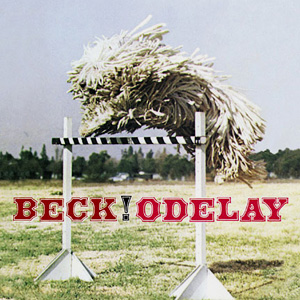
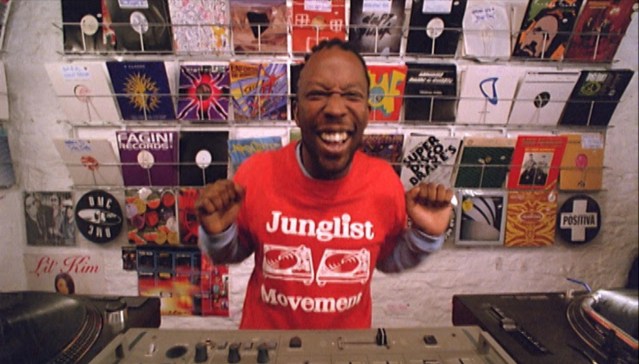
The first song I downloaded when a friend told me about Napster in the year 2000 was "Oh No" by N.O.R.E. Before downloading the mp3, I'd only ever heard that song in 15 second increments, by way of small RealPlayer files hosted on music fan sites on the internet. This was in large part how I discovered music in middle school and high school: I can vividly recall the navigation and pages from music fan websites for music I was actively exploring at the time, like Beck (whiskeyclone.net) and the Prodigy (prodigy.geomax.net), or on general purpose "clip" sites whose URL's I've forgotten. These sites freely shared these tiny music and video clips interviews, photos, Winamp skins, wallpaper, guitar tabs, and gossip/rumors. These sites were great because I had access to music I couldn't otherwise listen to on CD at that time, but this mode of music exploration created a primary source deficit: I knew more of the lore about the music than had actually listened to the music itself.
But I wanted to fake it till I made it! An unrelated technology that I encountered around this time made this possible: iron-onto-fabric paper for inkjet printers. We had an inkjet printer at home and computer stores had started to sell packs of this paper: it was letter-sized, you'd print whatever you image or text wanted on the paper, and use an iron to heat transfer the image to a t-shirt. Suddenly I could wear images from the internet! And maybe somehow find fellow travelers; I daydreamed that there might be sleeper Prodigy fans in suburban Omaha in the year 2000 who might see me wearing a shirt and clock a shared interest.
I have no idea how expensive it was in the year 2000 to professionally commission a run of custom shirts, but it was cost-prohibitive enough that being able to print t-shirts like this was a revelation. Unfortunately I can't find any surviving pictures of the shirts I made this way, but I vividly recall the specific concepts:
After this initial run of t-shirts, my interest in clothing drifted elsewhere. But I still feel like "make your own merch, for yourself" is one of the most pure ways to do it. Making your own merch ensures that there's no more of a given merch concept out in the world than what's needed for those who actively wear or support it.
For a couple of summers after high school, I helped run a non-profit thrift store, and as a result spent a lot of time vetting other peoples' donated stuff or checking out estate sales. This was at a time (~2005 or so) when the cost of producing printed clothing was changing dramatically: I vividly remember the summer when our store started to receive several waves of excess "corporate volunteering event" t-shirts, or excess "fundraiser 5k for chronic disease" t-shirts. Most of this merch ended up recycled or in a dumpster, simply because in a small store there's a premium on floor space. But I began to form a hypothesis that many people have weird intuitions about the relative value of professionally manufactured merch: if you've lived a lifetime in a mode of production where custom merch was scarce and more expensive to produce, it's hard to unlearn that basic merch orientation at a point in time where merch has increasingly become ubiquitous and cheap.
I experienced this same mismatch in peoples' intuition after Hurricane Sandy in 2012, when I went with a group of coworkers and friends to the Rockaways to help sort out donated goods on the first day after the hurricane where the weather in NYC had started to get cold. We were trying to look out for coats, gloves, and hats, in particular. We were doing the sorting in a series of huge piles of clothing that had been literally dumped in a parking lot. It was shocking to see what people had donated: tank tops, underwear, swim gear, and more custom-printed t-shirts than I've ever seen in my life. I'm sure some of those donations were put to good use, but this was my own joker moment with merch: how callous can you be to hear that people need warm clothing in the aftermath of a hurricane, and donate the most brain-dead cheaply printed corporate work event t-shirts imaginable? I think in this instance I chose to refuse to think that most people do this maliciously, instead blaming merch and the merch mindset. Merch warps our sense of scale, our sense of what volume of custom-manufactured goods like this are even appropriate to produce in the first place.
We are now living in an era where all of this has gotten appreciably worse: other people have written extensively about how nasty the impact of fast fashion and just-in-time clothing manufacturing are, both on the environment and workers. But people keep making and buying merch! I continue to experience this frequently in a work context: I'm the office grinch who actively doesn't want or doesn't want to have made shirts or backpacks or hoodies for any reason or occasion. We can, and should, find literally any other way to memorialize major cultural works or significant events. Merch also challenges the "there's no ethical consumption under capitalism" catechism, for me: no one's day-to-day comfort depends on merch! It really does come down to individual decisions. Any single person can say no to merch, by refusing to buy or opt into free printed goods, and we'll get a little closer to a merch-free utopia.
I'm far from free of merch; I just try to operate under a consistent set of merch principles: